
Most contractors get new work through referrals and
word of mouth. This works until it does not — and
it always stops working eventually. A slow winter,
a key referral source who moves away, or a single
slow month can empty your pipeline completely.
The contractors who grow consistently are not the
ones with the best reputation. They are the ones
with a repeatable system for generating new
appointments every single month — regardless of
season, referrals, or market conditions.
This guide shows you exactly how to build that
system for your construction business.
"Contractors who have a systematic appointment
setting process generate 3x more revenue than
those who rely entirely on referrals — because
their pipeline never runs dry."
Step 1 — Define Your Ideal Client
Before reaching out to anyone, get clear on exactly
who you want to work with. Define your ideal client
by project type, budget range, location, and
decision-making authority.
For a general contractor this might be:
Property owners with renovation budgets above $50,000
Commercial property managers in your service area
Real estate developers working on multi-unit projects
Once you know exactly who you are targeting, building
a prospect list becomes straightforward.
Step 2 — Build a Targeted Prospect List
Use these sources to build your list:
LinkedIn — search by job title and location
Houzz Pro — find homeowners with active projects
BuildZoom — identify developers and property owners
Apollo.io — verified contact data with email addresses
ZoomInfo — commercial decision-maker contacts
Build a list of 100 to 200 targeted prospects before
you start any outreach. Quality matters more than
quantity — a focused list of 100 ideal clients
outperforms a generic list of 1,000 every time.
Step 3 — Run Personalized Outreach Campaigns
Generic outreach does not work. Personalized
outreach does. Every message should reference
something specific about the prospect — their
location, their property type, or a recent project
in their area.
A simple outreach sequence for contractors:
Day 1 — First email introducing your company
and referencing their specific situation
Day 4 — Follow-up email with a relevant result
or case study from a similar project
Day 8 — LinkedIn connection request with a
short personalized note
Day 12 — Final email with a direct booking link
to your calendar
Keep every message short — 4 to 6 sentences maximum.
Busy property owners and developers do not read
long emails from contractors they do not know.
Step 4 — Pre-Qualify Before Booking
Not every response deserves a meeting. Before
booking any appointment, confirm:
Budget — do they have the funds to move forward?
Timeline — are they ready to start within 90 days?
Authority — are you talking to the decision maker?
Project fit — is this the type of work you want?
A 5-minute qualification call before booking saves
hours of wasted site visits and proposal writing.
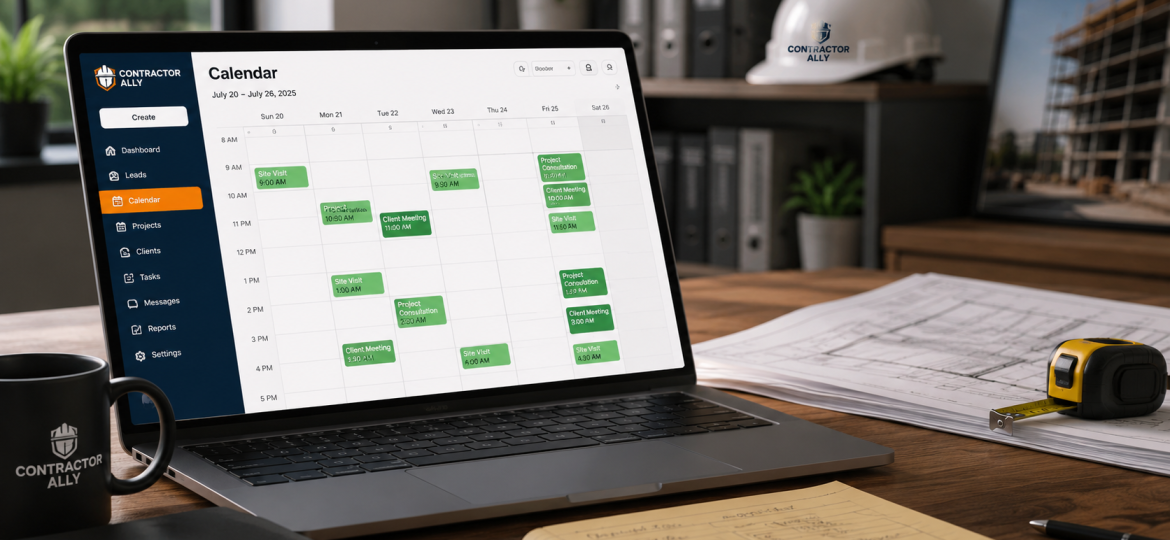
Step 5 — Automate Your Calendar Booking
Once a prospect is qualified, make it effortless
for them to book. Use a scheduling tool like
Calendly or GoHighLevel that connects to your
calendar and lets prospects pick a time slot
without any back-and-forth.
Send the booking link directly in your outreach
email. Every friction point you remove increases
the number of meetings that actually get booked.
1Define your ideal client by project type, budget,
and location before building any prospect list
2Build a targeted list of 100 to 200 prospects
using LinkedIn, Houzz Pro, Apollo.io, and BuildZoom
3Run personalized outreach sequences across email
and LinkedIn with automated follow-up at Day 4, Day 8, and Day 12