
A Bill of Quantities is a detailed document listing
every material, labor hour, and cost component needed
to complete a construction project.
It is the foundation of every competitive bid. A
well-prepared BOQ wins contracts. A poorly prepared
one loses margin — even when you win the job.
The contractors who consistently win commercial bids
are not always the cheapest. They are the ones who
submit the most accurate, professionally formatted
BOQ that gives clients and developers confidence
in their capability.
- Underbid and win the job but lose money delivering it
- Add pricing inaccuracies that erode margin on every line item
- Miss cost items that come straight out of your profit
"The contractor who submits the most accurate BOQ
wins the most commercial contracts. Clients trust
detailed, well-structured bills of quantities because
they signal professional capability."
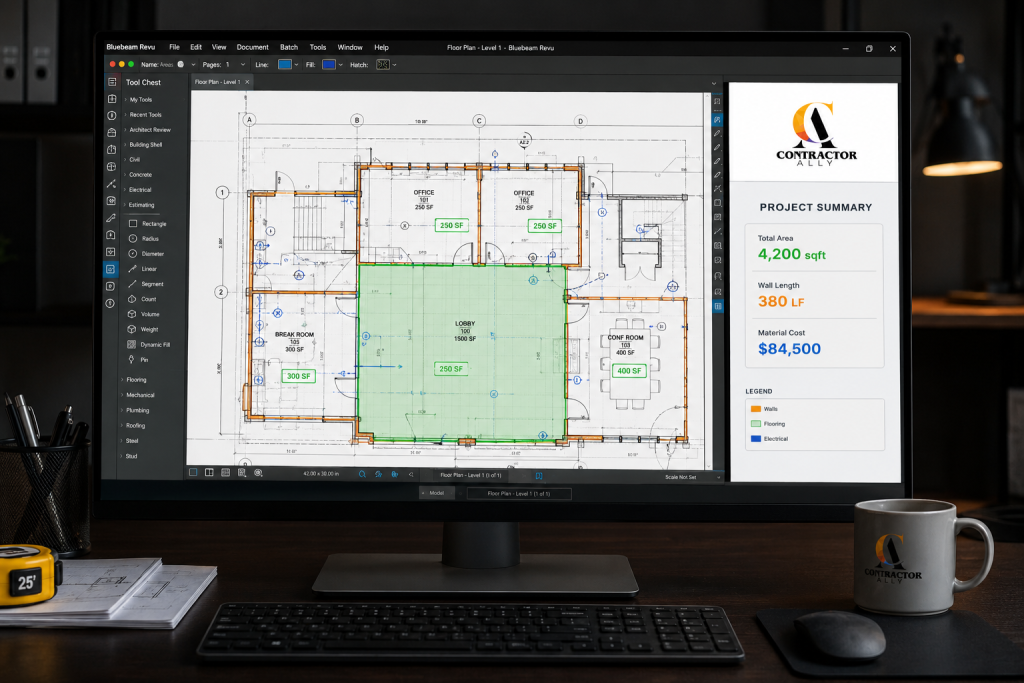
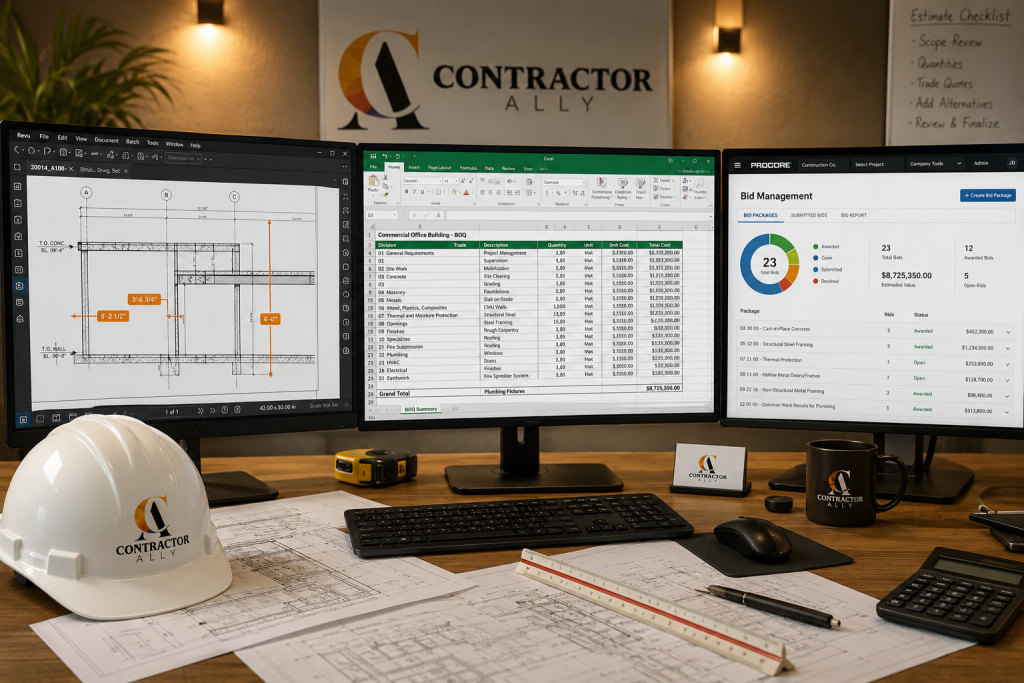
Every material quantity must come from the actual
drawings — not estimates, not memory, not rule-of-thumb
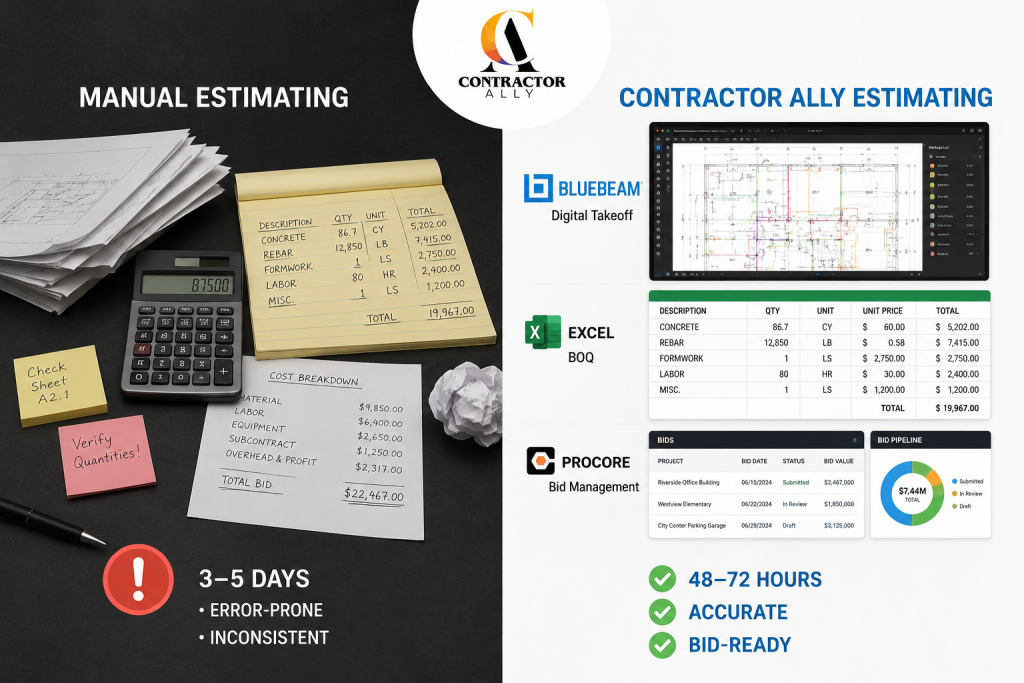
calculations. Use digital takeoff tools like PlanSwift
or Bluebeam Revu to measure directly from PDF or CAD
drawings. Manual measuring introduces errors that
compound across every line item in your BOQ.
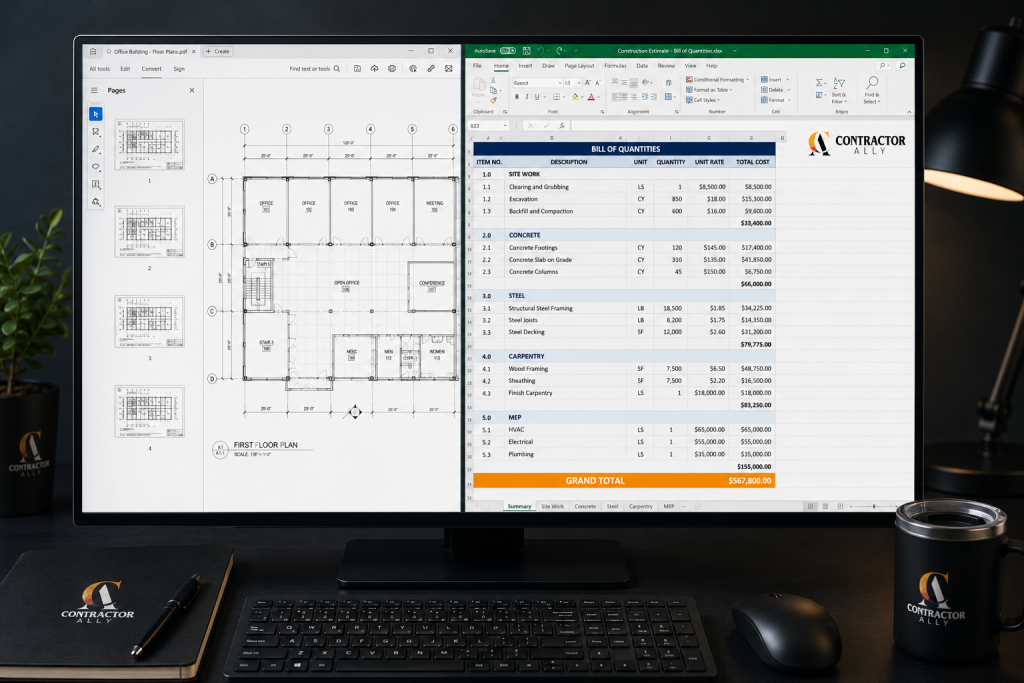
A properly structured BOQ is organized by trade
and work section. The standard sections are:
Preliminaries and General Requirements
Substructure and Foundations
Structural Frame
External Envelope
Internal Finishes
Mechanical and Electrical
External Works
Price every line item with current market rates —
not last year’s numbers. Material costs fluctuate
significantly. Verify current supplier pricing
before finalizing any BOQ submission.
1Organize by trade section not by material type or supplier for maximum clarity.
2Verify current market pricing with suppliers
before finalizing every single estimate
3Run a preliminaries checklist on every bid to
ensure no cost is missed and absorbed
The most commonly missed costs
in construction BOQs:
Temporary works and site setup
Project management time
Waste disposal and clearance
Permit fees and inspections
Equipment hire and fuel
Subcontractor coordination
Every missed cost comes directly
out of your margin. Build a
standard checklist and run it
on every estimate.
Step 4 — Submit Professionally
Never submit a BOQ without:
A cover letter summarizing
your scope understanding
Any assumptions or exclusions
clearly stated
Your proposed timeline
Relevant project experience
Clear contact details and CTA
The cover letter turns a quote
into a proposal — and a
proposal into a conversation
that wins contracts.
Tools we use:
PlanSwift · Bluebeam Revu
Autodesk Construction Cloud
Procore · Microsoft Excel
Never submit a BOQ without:
A cover letter summarizing
your scope understanding
Any assumptions or exclusions
clearly stated
Your proposed timeline
Relevant project experience
Clear contact details and CTA
The cover letter turns a quote
into a proposal — and a
proposal into a conversation
that wins contracts.
Tools we use:
PlanSwift · Bluebeam Revu
Autodesk Construction Cloud
Procore · Microsoft Excel