

Delays in construction rarely happen because of
one big problem. They happen because of ten small
coordination failures that compound over time —
a sub who was not confirmed, a material delivery
that was not tracked, a schedule conflict that
nobody caught until it was too late.
The general contractors who consistently deliver
projects on time are not the ones working the
hardest. They are the ones with the tightest
coordination systems — written checklists, daily
confirmations, and clear escalation protocols
when something goes wrong.
This checklist covers everything you need to
coordinate subcontractors effectively from
mobilization to project completion.
"A construction delay costs an average of $3,200
per day in combined direct costs, lost productivity,
and client relationship damage. Most delays are
not caused by unforeseen circumstances — they are
caused by coordination failures that could have
been prevented with a simple checklist."
Pre-Construction Coordination Checklist
Before any subcontractor mobilizes on site,
confirm every item on this list:
Signed subcontract agreement with clear scope
Insurance certificates received and verified
Site safety induction scheduled and confirmed
Material lead times confirmed and delivery
dates locked in the master schedule
Equipment and tool requirements confirmed
Access requirements communicated — keys,
codes, site rules
Emergency contact details collected from
every sub foreman
Weekly Coordination Checklist
Every week without exception, run this check:
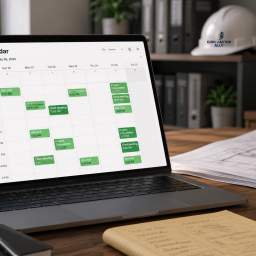
Master schedule reviewed and updated
All subs scheduled for next week confirmed
in writing — not just verbally
Any conflicts between trades identified
and resolved before they hit the site
Material deliveries for next week confirmed
with suppliers
Client update sent with current progress
and upcoming milestones
Any variations or scope changes documented
and priced before work begins
Daily Site Coordination Checklist
Every morning on an active project:
Confirm which subs are on site today
Verify access is clear for all scheduled trades
Check that materials needed today are on site
Flag any conflicts or dependencies to resolve
before they become delays
Document any issues, decisions, or changes
in the project log
End of Day Checklist
Every afternoon before leaving site:
Confirm tomorrow’s sub schedule is still accurate
Check that any materials needed tomorrow
have been delivered or are confirmed
Update the master schedule with actual
progress vs planned progress
Send any required updates to the client
or project owner
Log any variations that occurred today
for pricing and documentation
Subcontractor Performance Tracking
Track these metrics for every subcontractor
on every project:
On-time mobilization rate
Schedule adherence percentage
Quality of work — defects and rework rate
Responsiveness to communication
Invoice accuracy and timeliness
Subcontractors who consistently underperform
on these metrics cost you more than their
lower price saves you. Track the data and
make subcontractor decisions based on
performance, not just price.
1Confirm every subcontractor in writing
at least 48 hours before their scheduled
mobilization date — never assume
2Update the master schedule every week
and share it with all trades so everyone
sees the same picture at the same time
3Document every variation, decision, and
delay in writing the day it happens —
not at the end of the project
How Contractor Ally Handles This For You
Contractor Ally acts as your remote project
coordinator — managing subcontractor schedules,
sending daily confirmations, tracking milestones,
and flagging conflicts before they become delays.
We maintain your master project schedule daily,
coordinate all subcontractor communication,
and deliver weekly status reports to you and
your clients — so every project runs on time
without you managing every detail personally.
Tools we use:
Procore · Autodesk Construction Cloud
Microsoft Project · Smartsheet · Google Calendar