How to Get a Building Permit Faster in Any US Jurisdiction
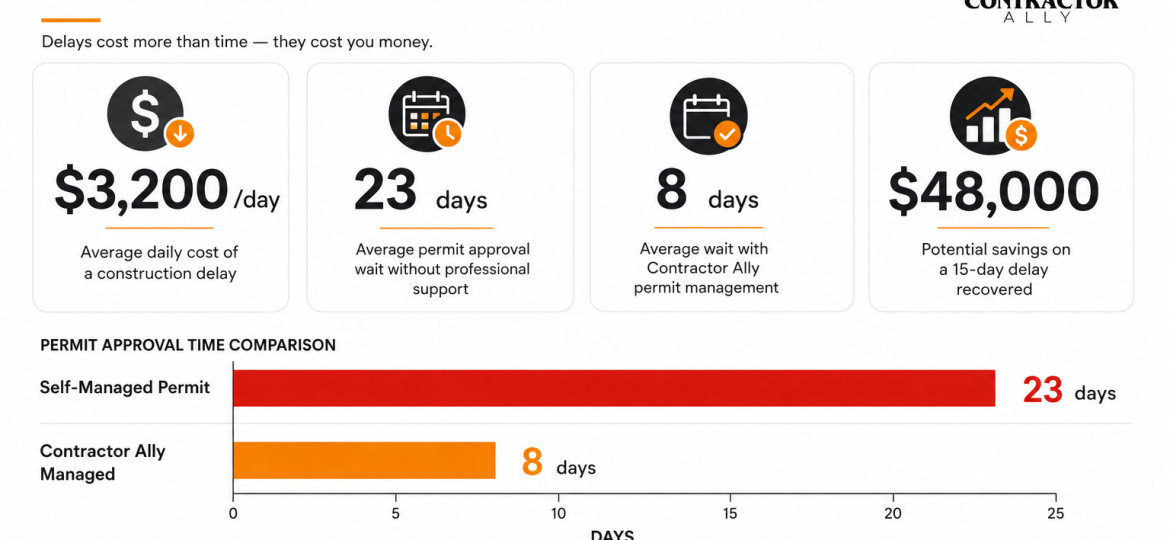
Permit delays cost contractors an average of $3,200
per day. Here is exactly how to research requirements,
prepare complete applications, and get building
permits approved faster in any US jurisdiction.
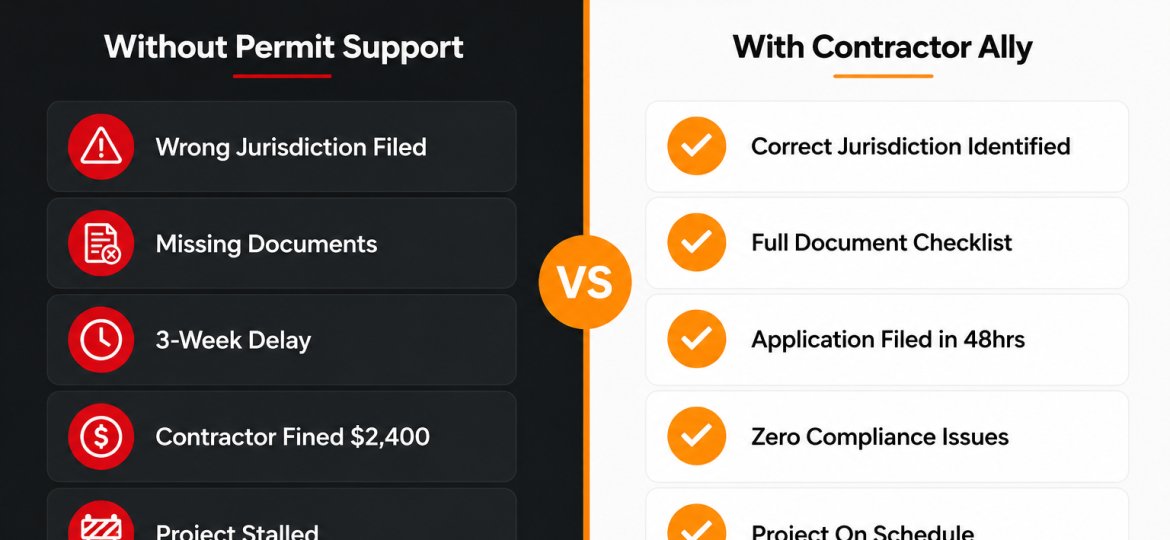
Permit delays are not random. They happen for predictable reasons that are almost always avoidable with proper preparation:
Wrong jurisdiction — application submitted to the wrong office
Missing documents — checklist not completed before submission
Incorrect forms — outdated application forms used
Missing fees — fee schedule not checked before submission
Incomplete drawings — plans do not meet local requirements
The Real Cost of Permit Delays
Every day a project sits waiting for a permit costs money. The average daily cost of a construction delay includes:
Direct labor costs for idle crew Equipment hire continuing to run Subcontractor rescheduling fees Client penalty clauses activating Opportunity cost of the next project that cannot start
At $3,200 per day average, a 3-week permit delay costs over $67,000 in combined direct and indirect costs.
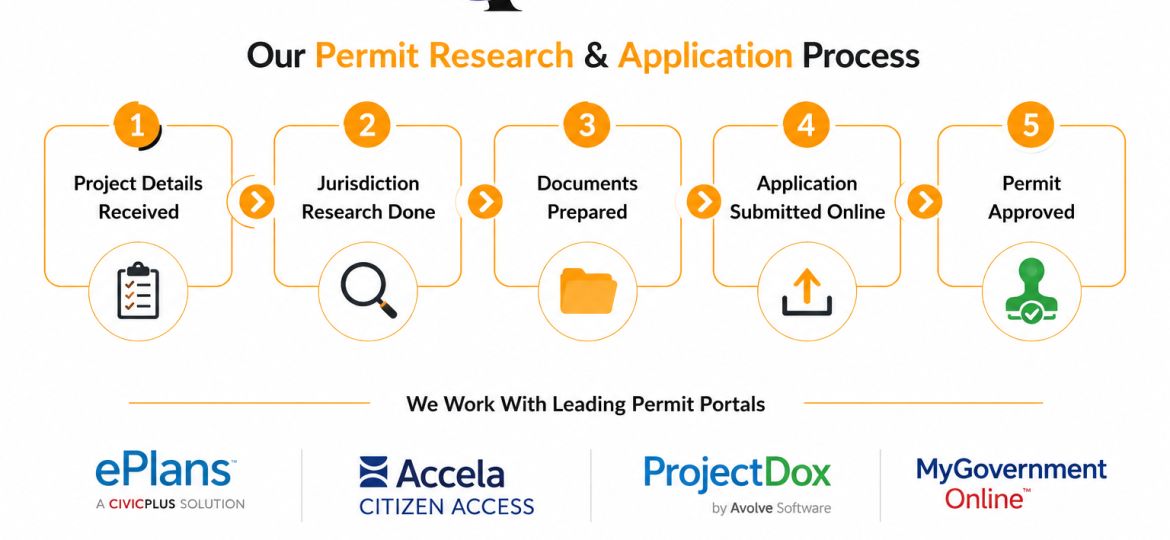
Step 1 — Research the Right Jurisdiction First
Before preparing a single document, confirm exactly which authority has jurisdiction over your project.
In the US, permit authority can sit at city, county, state, or special district level depending on project type and location.
A commercial project in an unincorporated area may have different requirements than the same project within city limits — even if they are one mile apart.
Confirm jurisdiction before you prepare anything.
Step 2 — Build a Complete Document Checklist
Every jurisdiction publishes a permit checklist. Find it, print it, and check every single item before submission.
Common documents required for building permits:
Completed application form Site plan with dimensions Architectural drawings Structural engineer’s stamp Energy compliance forms Owner authorization letter Contractor license number Insurance certificate Fee payment
Missing any one of these triggers a revision request and adds weeks to your timeline.
"Most permit delays are entirely avoidable. The contractors who get permits approved fastest are not the ones with the best relationships at the permit office — they are the ones who submit complete, correct applications the first time."
The average contractor takes 6+ hours to respond to
a new email inquiry. By that point the prospect has
already called someone else. Here is how to fix your
email response system and stop losing bids to faster
competitors.
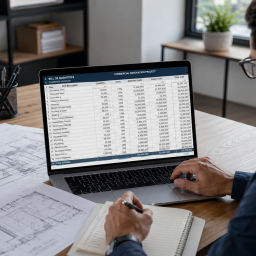
A poorly written Bill of Quantities costs you bids
and margin. Here is exactly how to prepare a BOQ
that is accurate, competitive, and formatted to win
construction contracts.
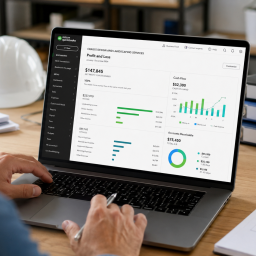
Most construction companies are guessing at their
finances. Here is exactly what every contractor
must track monthly to maintain clean books, protect
margins, and never scramble at tax time again.
Stop waiting for referrals and start building a
predictable pipeline. Here are 7 proven lead
generation strategies that work specifically
for general contractors and construction businesses
in the US.
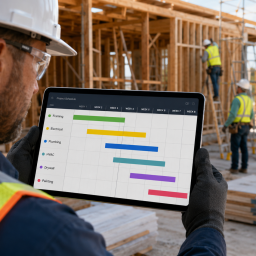
Poor subcontractor coordination causes delays, cost
overruns, and angry clients. Here is the complete
checklist every general contractor needs to keep
subs on schedule and projects on budget.
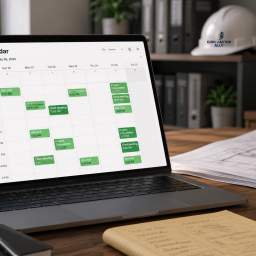
Stop relying on referrals that dry up every winter.
Here is a proven system for filling your calendar
with qualified construction leads every single month
without cold calling or paid advertising.
Most contractors waste money on paid leads when Google is sending free high-intent traffic to their competitors. Here is exactly how to rank on Google as a local contractor and generate consistent inbound leads without paying per click.